
Six Days in Kinshasa
I was fortunate to be invited to participate in the second DRC Social Innovation Summit in September 2023. The group of over 500 people came from academia, government, and business. The countries represented were diverse ranging from the 8 central African (Nigeria, Togo, Uganda, Ghana, Kenya, Senegal, Benin, Uganda) nations to international guests from Bangladesh to Costa Rica.
The conference mission was compelling: ‘We envision a society free of poverty through social businesses, and where everyone is an entrepreneur and a changemaker for the public good.’
I wondered what value I could bring to the conference. I was naïve – the important question was what I could learn from the conference.
The conference was the brainchild of AgroMwinda Leadership Academy (ALA) and the Institute for Social Transformation, Tangaza University College (Nairobi-Kenya) and was billed as a platform to identify needs, build research, and ultimately work towards social change through entrepreneurship. The topic transcended boarders and identified the vast region of Central Africa as a region of great physical, natural, mineral wealth.
Main Take Aways
- Solutions to pressing social and economic problems will come from inside the region not outside. This group was unanimous in believing … knowing that solutions to economic and social problems do not come from outside but in fact reside in each community.
- Critical Need for Education and Training Youth. Business school is essential but true entrepreneurial education begins at a very young age and incorporates the generation of skills in confidence, vision (which many called dreaming), business planning, finance and skills in networking (more about this later)
- There must be a consolidated effort to return knowledge and scholars back to the African nations. The most passionate presenters were individuals who had trained overseas and returned to their home to make a difference.
- Language is a barrier. We westerners tend to believe everyone learns and becomes fluent in English at a young age. Not so and in fact, French – not English was spoken in the Congo and the DRC and Swahili is prevalent in all central African nations. Television broadcasts are in French with one BBC channel in the large city of Kinshasa. Now while French is the official language, there are approximately 215 languages spoken in the DRC.
- Valuable resources are mined, farmed locally and shipped overseas only to return, and sold, as finished products such as oil and gasoline, canned goods, pharmaceutical. The process of returning finished product that is taxed and sold at higher prices does not make sense.
- Corruption: Government power is not always altruistic. In fact, in several regions producing wealth and power for the few is the main objective and reason to keep corrupt military, government and police forces in line. A concept that was supported by all conference members (except a few government officials attending) was the idea of tax-free boarders. Excessive taxation that benefit the few can be a significant barrier to commerce.
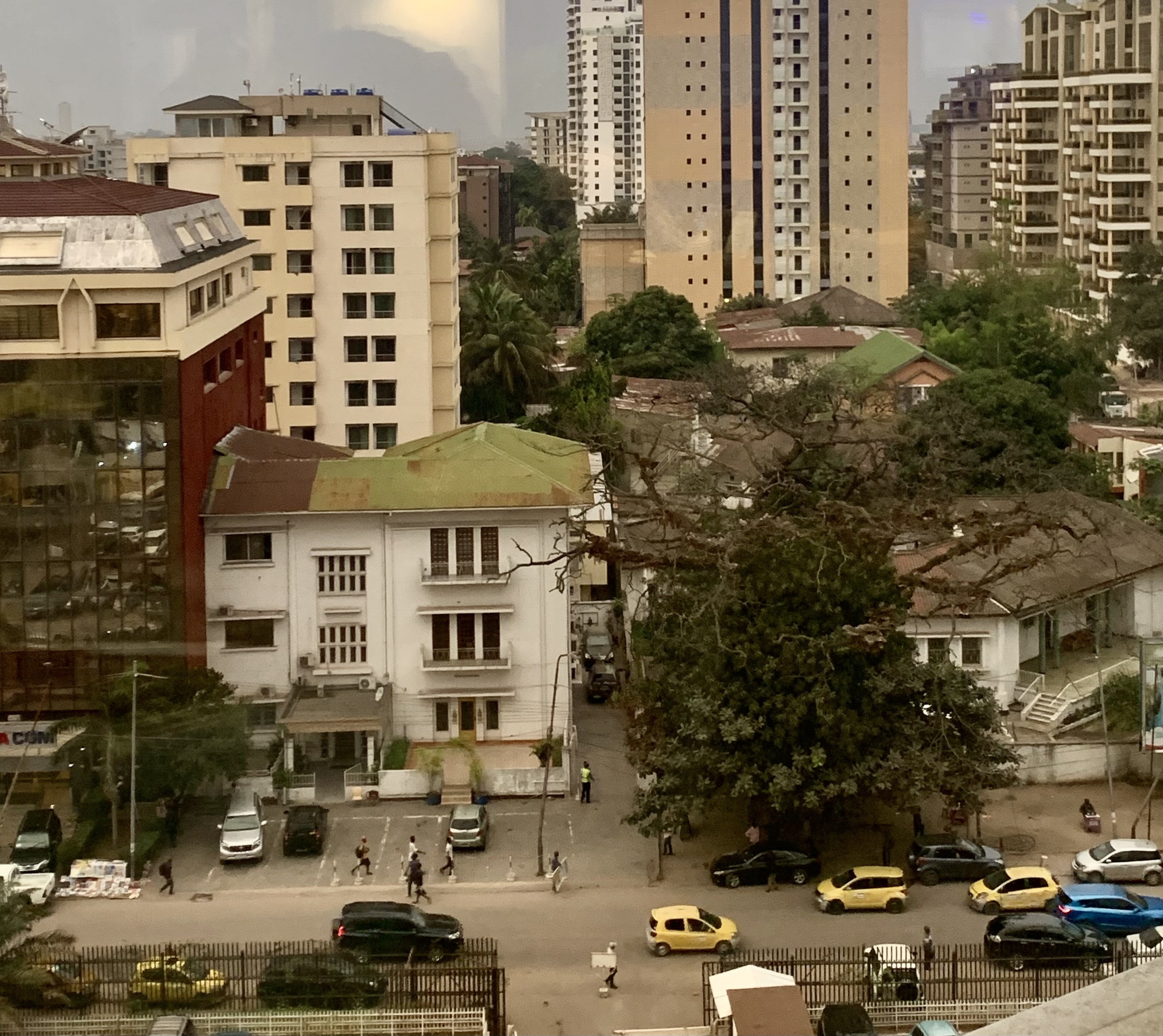
- Pollution: The problem is massive. Wood burning and oil burning are the main source of cooking. However, outdoor pollution is primarily driven by an informal method of trash control – burning waste in the streets. Driving in from the airport I counted 23 bonfires along the highway fueled by trash. The air in the city is oppressive and a primary cause of respiratory issues with the population. One conference participant commented that until the collection and safe destruction of waste is made profitable, Kinshasa will continue to be buried in their own trash. In neighboring Brazzaville, an electric blackout due to a pileup of 16 meters of plastic trash which plugged hydro-electric turbines occurred in 2022. The problem is not hopeless, but it is significant.
- Employment (not necessarily unemployment) There are regulations that generally address employer responsibilities but are rarely followed. The workweek according to one of the conference attendees ranged from 45 to 72 hours per week.
- Multinationals. It’s time to talk about the impact of multinational involvement. The problem speaks to the core of globalization: when pockets are deep, we let others dictate how money is spent. This was a theme that was stated many times, perhaps several different ways, but with the same intent. Make no mistake. Any region that has natural wealth is a target for outside investment and being taken advantage of. The problem is not owned by any one country.
The Silver Lining(s)
- There is a strong and measurable effort to foster social entrepreneurs beginning with the very young. Education is free and compulsory between the ages of 6 and 16 in the DRC.
- Communication. Cellular communication is prevalent and growing in the central African Nations. According to World Data, about one half of the Congolese population has mobile service and about one quarter has internet service. Cell phone infrastructure is growing and positively impact education, commerce and health.
- There is a significant number of returning professionals and academics who have worked overseas for education but are returning to the central African nations to make a difference.
- Women in politics. The benefit cannot be understated. Female motivation in politics seems to be different from their male counterparts. Over 60% of those in parliamentary positions in Rwawanda are female. According to the Brookings institute, African politics has approximately 25% participation and corporate representation of 24% female. The conference did not go so far as to promote a female agenda but did highlight female action groups that were making significant contributions in action to reverse or control climate change.
- There is no longer a reliance or tie to Belgium. The country and region have truly entered a new era of development and unification. The country continues to build its own identity and is very committed to building Africa first.
The message I have for this experience centers on the most important lesson I learned. That lesson is to realize my true responsibilities. First, as a westerner, I am obligated to learn more about my global neighbor to truly understand the history and elements of transformation. Second, as a professor of business, I believe U.S. business ethics studies that address multinational obligations must change. Western business studies must stop dictating moral and ethical standards base on western culture and start listening and respecting regional ethos – those policies and procedures that are identified by the region as best practices. Perhaps even more important is recognizing the importance of academics and students to visit and learn from six days in Kinshasa.
 Martha Wilcoxson, EdD, Colorado NDR
 Positive Behavior, Productivity, Passion
Leave a comment