
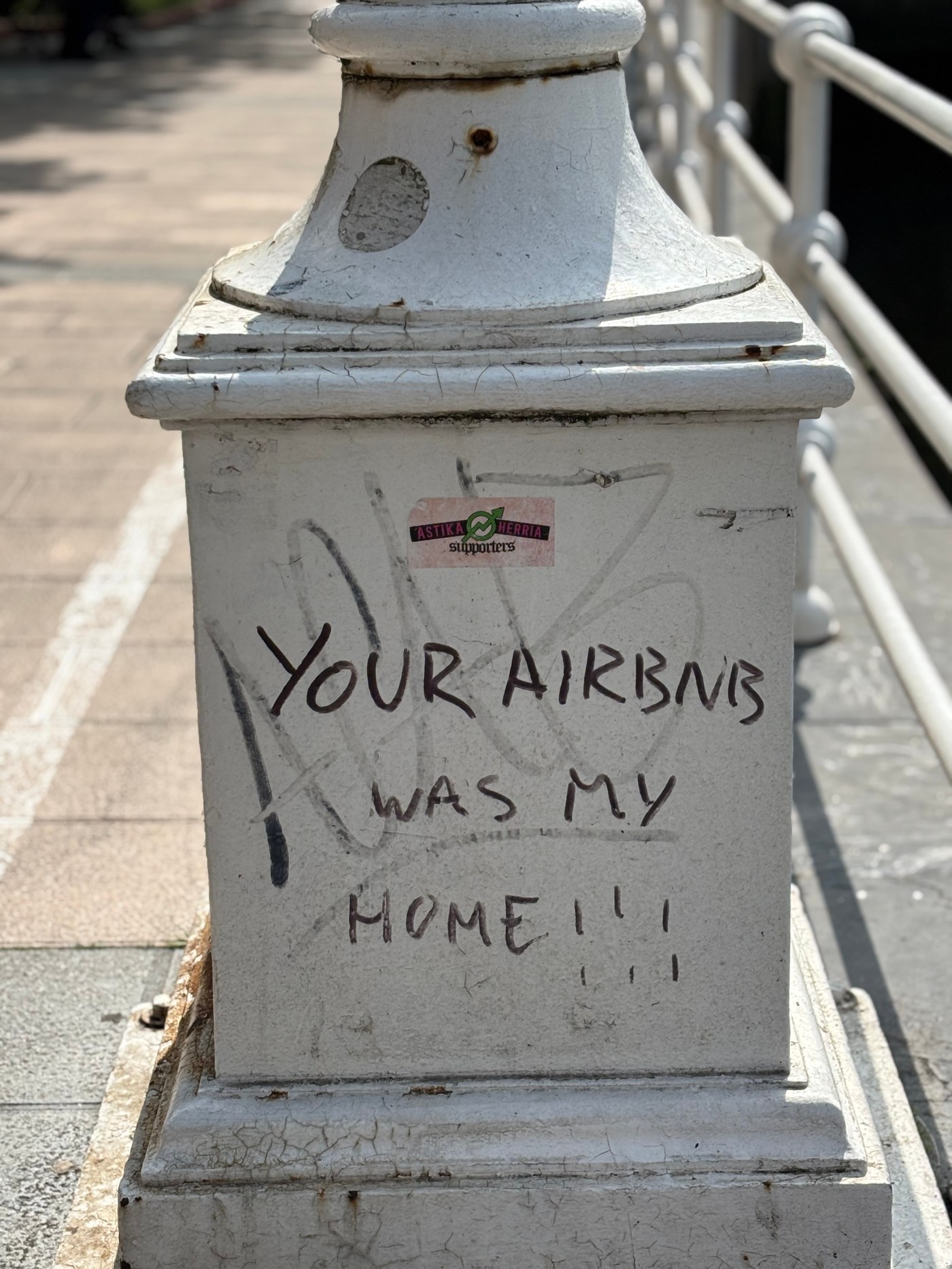
I recently returned from Bilao, Spain. The city is beautiful. The history and cultural sites led by the Guggenheim Museum are impressive. The tree-lined streets are broad, easy to navigate, and pleasant to stroll. Tourism is a driving economic force as shown by the crowds of visitors to historical and environmental sites. When I travel, I often wonder if I would like to live in the destination – I certainly would in Bilbao.
An evolving socio-economic crisis shared by many such beautiful cities was explained to me by a local I met walking. Digital vacation home-sharing platform are pushing residents out of neighborhoods. I initially believed the opportunity for tourist to arrange a long-term stay in a home would be a positive boost to the economy, which it is, but here is the rub, home sharing has a disruptive impact on the accommodation sector. Platforms such as Airbnb and Vrbo are inflating home and apartment values and changing neighborhoods. The impact of the short-term vacation rental market in popular urban areas is challenging community housing markets.
Real investment fuels a community, but the goals of economic development may run counter to housing security. Housing is a basic human need which should be protected. Unfortunately, real estate investors will always seek opportunities the parlay ownership. Technology and the rise of global tourism have fueled the short-term rental drive. This is a basic fact of capitalism. Short-term rentals are now an economic sector and as such, open to investment speculation. The outcome disrupts entire communities. Existing residential renters face accommodation shortages and where available, rapidly rising rents. Potential home buyers are facing residential real estate inflation and are being priced out of the market.
This boils down to a question of utility and requires government and regulatory agencies to play a key role in delivering equity to communities. The problem is not that easy to unwind, particularly in countries and regions that are heavily populated. As a comparison, in the southwest of the United States, where land and residential sites are plentiful and affordable, state and local regulators tend to focus on rental policies. However, heavily urbanized areas require a structural approach that preserves and protects housing access for their citizens.
I made a point to ask hotel management their thoughts on short-term rentals. The consensus seems to be that while hotel accommodation and short-term residential rental share similar basic services, each platform is different. Hotels provide on-site services: bars, restaurants, spa, meeting rooms, banquet rooms, room service, airport transportation, and 24/7 on site management – all of which are lacking in short-term residential accommodations.
It is not all negative. Tourism is important in a global economy. There is no doubt that the ability to live and work temporarily in a neighborhood promotes exchange, understanding, appreciation and respect of diverse cultures. Being good tourists is the key.
 Martha Wilcoxson, EdD, Colorado NDR

Leave a comment